
IPTV Risks in Malta: Court Blocks, ISP Warnings and What to Avoid
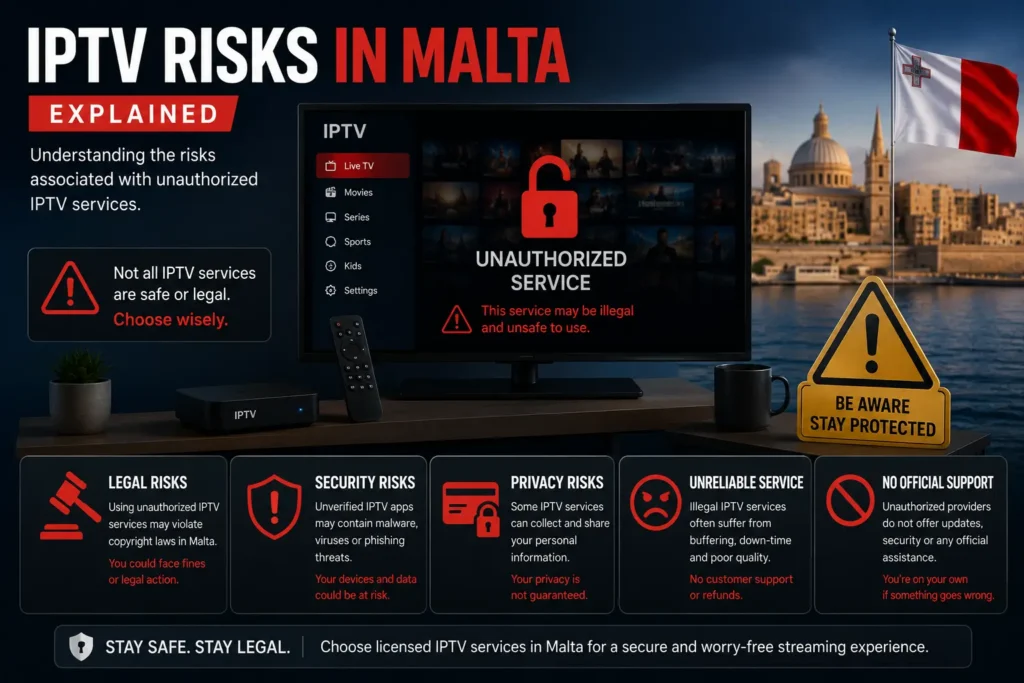
Understanding the IPTV risks in Malta matters just as much as knowing how the technology itself works. This guide walks through the general risks associated with unauthorized streaming, explains why some services disappear without warning, and offers practical guidance on avoiding problems altogether. None of this replaces professional legal advice, but it gives households a realistic framework for evaluating any provider.
Quick Answer
The IPTV risks in Malta generally relate to using services that distribute content without proper licensing, which can lead to sudden service disruptions, unreliable access, and potential enforcement actions from rights holders or internet service providers. This article does not reference specific court rulings or confirmed enforcement cases, since these vary and change over time. Instead, it focuses on general risk patterns and how to protect yourself by choosing transparent, properly licensed providers.
Key Takeaways
- Risks tied to IPTV largely stem from unlicensed content distribution, not the technology itself.
- Internet service providers can, in some jurisdictions, restrict access to services flagged for copyright issues.
- Unauthorized services often disappear suddenly, leaving subscribers without recourse.
- Choosing a transparent, properly licensed provider significantly reduces exposure to these risks.
- This article is informational only and does not constitute legal advice.
Table of Contents
- Understanding IPTV Risks in Malta
- How Site Blocking Generally Works
- What ISP Warnings Typically Mean
- Why Unauthorized Services Often Disappear
- Financial Risks of Unlicensed Providers
- Data Privacy and Security Risks
- Warning Signs of a Risky IPTV Provider
- How to Reduce Your Exposure to Risk
- Comparison: Risky vs Responsible IPTV Choices
- Common Mistakes That Increase Risk
- Best Practices for Choosing Safely
- Decision Guide: Assessing Risk Before Subscribing
1. Understanding IPTV Risks in Malta
Discussing the IPTV risks in Malta requires separating general risk patterns from confirmed, specific events, since this article does not cite particular court cases or enforcement actions.
What This Article Covers
This guide focuses on commonly understood risk categories associated with unauthorized streaming, based on general industry patterns rather than specific Maltese rulings.
An Important Disclaimer
This article is for informational purposes only and does not constitute legal advice. It does not confirm or describe any specific court decision, ISP action, or enforcement case in Malta.
Why This Topic Matters
Understanding general risk patterns helps consumers make more informed decisions, even without referencing specific legal proceedings.
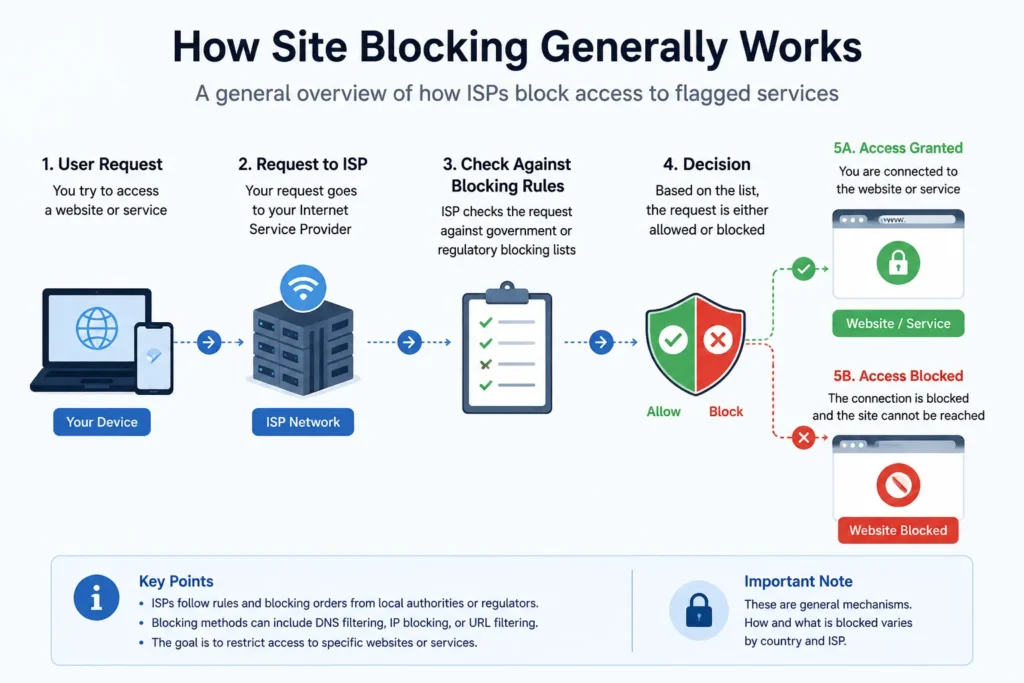
2. How Site Blocking Generally Works
Site blocking is a mechanism used in various jurisdictions to restrict access to services associated with unlicensed content distribution.
The General Concept
In many countries, copyright holders can request that internet service providers restrict access to specific domains linked to unauthorized content distribution.
Why This Matters for Consumers
When a service is blocked at the ISP level, subscribers may lose access entirely, regardless of how much they’ve already paid for a subscription.
Malta’s Context
This article does not confirm specific blocking actions in Malta and encourages readers to consult official or legal sources for confirmed, up-to-date information.
3. What ISP Warnings Typically Mean
General Purpose of ISP Warnings
In some regions, internet service providers issue notices to customers when unusual or flagged traffic patterns are detected, though practices vary widely.
Why Warnings Are Issued
These warnings often relate to broader copyright enforcement frameworks rather than targeting individual households specifically.
What to Do If You Receive One
If a warning is received, reviewing your current IPTV provider’s licensing transparency is a reasonable first step, alongside seeking professional legal guidance if concerned.
4. Why Unauthorized Services Often Disappear
Sudden Shutdowns
Services distributing unlicensed content can be discontinued abruptly, sometimes without notice to subscribers.
Financial Loss for Subscribers
When a service disappears suddenly, subscribers often have no straightforward way to recover unused subscription payments.
Real-Life Pattern
This pattern is a well-known characteristic of unauthorized streaming markets generally, rather than something unique to any single provider or region.
5. Financial Risks of Unlicensed Providers
Wasted Subscription Costs
Paying for a service that later disappears results in a direct financial loss with little practical recourse for the consumer.
Untraceable Payment Methods
Some unauthorized providers request unusual payment methods, which can make disputing charges more difficult if something goes wrong.
Hidden Renewal Practices
Less transparent providers sometimes use unclear renewal terms, leading to unexpected charges for unsuspecting subscribers.
6. Data Privacy and Security Risks
Personal Information Exposure
Providers lacking clear privacy policies may not adequately protect personal data collected during signup.
Weak Account Security
Unauthorized services sometimes lack basic account security measures, increasing the risk of unauthorized access to personal details.
Device Security Concerns
Installing apps from unverified sources can occasionally introduce additional security risks to a Smart TV or streaming device.
7. Warning Signs of a Risky IPTV Provider
- Pricing significantly lower than any licensed streaming alternative.
- No clear terms of service or verifiable contact information.
- Requests for unusual or untraceable payment methods.
- Absence of consistent customer support or communication channels.
- Frequent, unexplained service interruptions or sudden changes.
8. How to Reduce Your Exposure to Risk
Research Before Subscribing
Take time to review independent feedback and confirm a provider’s transparency before committing to any subscription.
Use Secure Payment Methods
Choosing traceable, secure payment options helps protect against financial loss if a dispute arises.
Monitor Service Reliability
Consistent streaming quality across HD Streaming, Full HD Streaming, and 4K Streaming can be a positive indicator of a properly licensed service.
9. Comparison: Risky vs Responsible IPTV Choices
| Factor | Risky Provider | Responsible Provider |
|---|---|---|
| Content Licensing | Unclear or unverifiable | Transparent and properly licensed |
| Pricing | Unusually low | Reflects standard market rates |
| Communication | Limited or inconsistent | Clear, responsive support |
| Payment Methods | Unusual or untraceable | Secure and standard |
| Service Stability | Prone to sudden shutdowns | Generally stable and reliable |
10. Common Mistakes That Increase Risk
- Choosing a provider based solely on the lowest available price.
- Ignoring the absence of clear terms of service or contact details.
- Using untraceable payment methods without considering the risk.
- Failing to research independent reviews before subscribing.
- Assuming all IPTV services carry the same risk profile.
11. Best Practices for Choosing Safely
Prioritize Transparency
Choose providers who clearly explain their licensing approach and maintain visible, verifiable business information.
Read Independent Reviews
Genuine user feedback often reveals reliability issues or red flags not visible from a provider’s own marketing.
Ask Questions Before Committing
A legitimate provider should be willing to answer questions about service reliability, support, and account security.
12. Decision Guide: Assessing Risk Before Subscribing
Checklist Before You Subscribe
- Does the provider publish clear terms of service and contact details?
- Is the pricing reasonable compared to standard licensed alternatives?
- Are payment methods secure and traceable?
- Have you found consistent, positive independent feedback about reliability?
Final Recommendation
When weighing the IPTV risks in Malta, the safest approach is prioritizing transparency, secure payment practices, and realistic pricing expectations, while consulting a legal professional for any specific concerns.
Conclusion
The IPTV risks in Malta generally center on unlicensed content distribution rather than the technology itself, and understanding this distinction helps consumers make safer choices. By recognizing warning signs, prioritizing transparent providers, and using secure payment methods, households can significantly reduce their exposure to disruption and financial loss. As always, this article is informational only, and anyone with specific legal concerns should consult a qualified professional.
FAQ
1. What are the main IPTV risks in Malta?
The main risks generally relate to using services that distribute unlicensed content, which can lead to sudden shutdowns, financial loss, and potential data privacy concerns. These risks stem from the content licensing status rather than the IPTV technology itself, which is a standard streaming delivery method.
2. Can an ISP block an IPTV service?
In various jurisdictions, internet service providers can restrict access to services flagged for copyright issues, though specific practices vary by country and provider. This article does not confirm particular blocking actions in Malta and recommends consulting official sources for current information.
3. What happens if my IPTV provider suddenly shuts down?
Unauthorized services distributing unlicensed content can disappear abruptly, often leaving subscribers without access and with limited options for recovering unused subscription payments. This is a well-documented pattern across unauthorized streaming markets generally.
4. How do I know if an IPTV provider is risky?
Warning signs include unusually low pricing, lack of clear terms of service, absence of verifiable contact information, and requests for unusual payment methods. Providers lacking transparency and consistent customer support generally carry higher risk.
5. Are ISP warnings common for IPTV users?
Practices vary significantly by region and provider, and this article does not confirm specific warning programs in Malta. If you receive any communication from your internet provider, reviewing your current service’s licensing transparency is a reasonable next step.
6. Is it risky to pay for IPTV with unusual payment methods?
Yes, using untraceable or unconventional payment methods can make it harder to dispute charges or recover funds if a service becomes unreliable or disappears. Secure, traceable payment options are generally recommended for any online subscription.
7. Can unauthorized IPTV use affect my personal data?
Providers lacking clear privacy policies may not adequately protect personal information collected during signup. Choosing transparent providers with visible privacy practices helps reduce this risk considerably.
8. How can I reduce my exposure to IPTV risks?
Research providers thoroughly, prioritize transparency and verifiable contact details, use secure payment methods, and monitor service reliability over time. These practices significantly reduce exposure to financial and privacy-related risks.
9. Does cheaper pricing always indicate a risky IPTV service?
Not always, but pricing significantly below standard licensed alternatives can sometimes indicate a lack of proper content licensing. It’s one factor among several worth considering rather than a definitive standalone indicator.
10. Should I consult a lawyer about IPTV risks?
If you have specific concerns about a provider’s legality or your own exposure to risk, consulting a qualified legal professional is recommended. This article offers general informational guidance only and does not constitute legal advice.
Suggested Internal Links
- Learn more about our IPTV subscription options in Malta.
- Check full device compatibility for supported apps.
- Find more answers in our FAQ page.
- Learn more about us on the About Us page.
- Have questions? Visit our Contact page.
- Return to the IPTV Malta 4K homepage.